

NEWSLETTER | EDITION 1
VCE Subject Selection
Choose with strategy, not stress
Subject selection is one of the first major decisions students make in their VCE journey. While it can feel overwhelming, the best choices usually come from balancing three things: future pathways, personal strengths, and genuine interest.
At Top Scope, we encourage families to think beyond "which subjects scale well?" and instead ask: Which subjects will help the student stay motivated, meet university prerequisites, and perform consistently over two years?
The three decisions families should make before locking in subjects
1. Subject load
Choose a realistic number of subjects for performance, balance and ATAR flexibility.
2. Interest + strengths
Select subjects students can practise consistently, not just subjects that appear to scale well.
3. Study Designs
Check what each VCE subject actually involves before making assumptions.
1 How many VCE subjects should students choose?
Most students complete VCE across Year 11 and Year 12. A common pattern is 6 subjects in Year 11 and 5 Unit 3/4 subjects in Year 12. Some students may also complete a Unit 3/4 subject early in Year 11, which can reduce pressure in Year 12 and provide an extra ATAR contribution.
Common pattern
Year 11 6 subjects
Year 12 5 Unit 3/4 subjects
ATAR aggregate usually uses
- best eligible English study
- next best three study scores
- 10% of fifth/sixth eligible subjects
Subject load is about balance
Key idea: more subjects can provide a useful safety net, but more does not automatically mean better. A student who is overloaded may perform worse across all subjects.
Visual tool: How subject number and performance affect the ATAR
These examples help students understand why subject selection is not just about doing as many subjects as possible. A fifth or sixth subject can add value, but stronger performance across a realistic load can matter more.
Example ATAR calculator screenshots
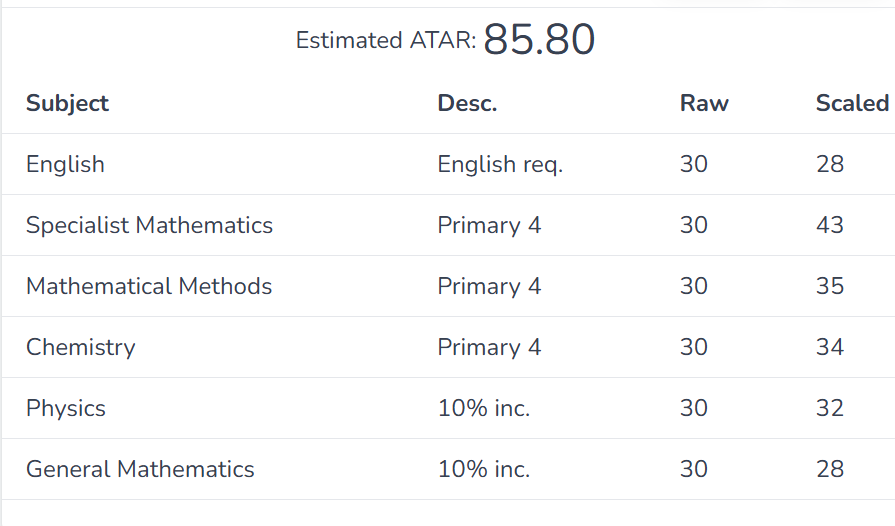
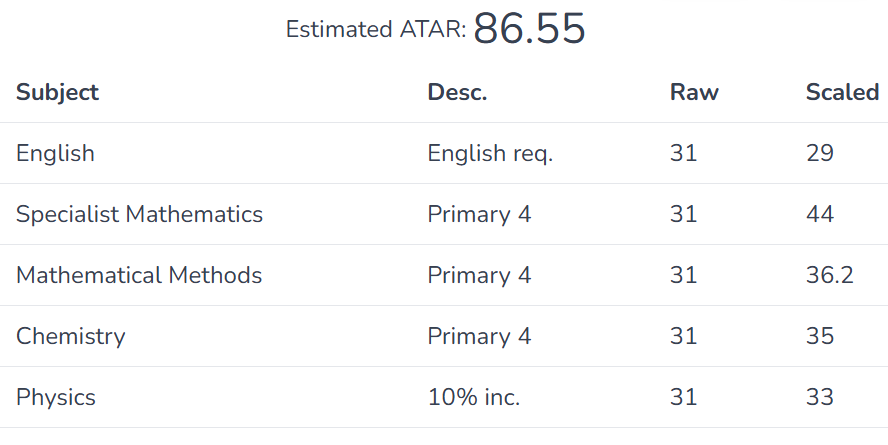
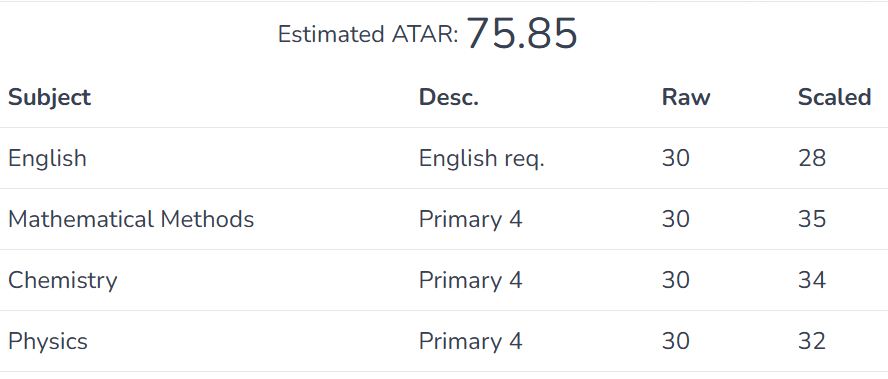
What students should notice
- A fifth and sixth subject can contribute a 10% increment.
- However, lifting performance by even one raw study score across core subjects can be powerful.
- Four subjects may reduce flexibility because there are fewer chances to build the ATAR aggregate.
A practical guide
- 5 Unit 3/4 subjects in Year 12 suits most students.
- 6 Unit 3/4 subjects may suit very organised, high-performing students.
- 4 Unit 3/4 subjects may be suitable in some circumstances, but it gives less flexibility and fewer chances to maximise the ATAR.
2 Choose subjects based on interest, strengths and pathways
Students are more likely to do well in subjects they are genuinely interested in and willing to practise consistently. A subject should not be chosen only because it "scales up". Scaling can help, but it does not replace strong performance.
Before choosing, ask:
- Do I enjoy the type of thinking required?
- Am I willing to revise this every week?
- Do my current results show a strong foundation?
- Does this connect to future course or career interests?
- Does it keep important pathways open?
Pathway examples
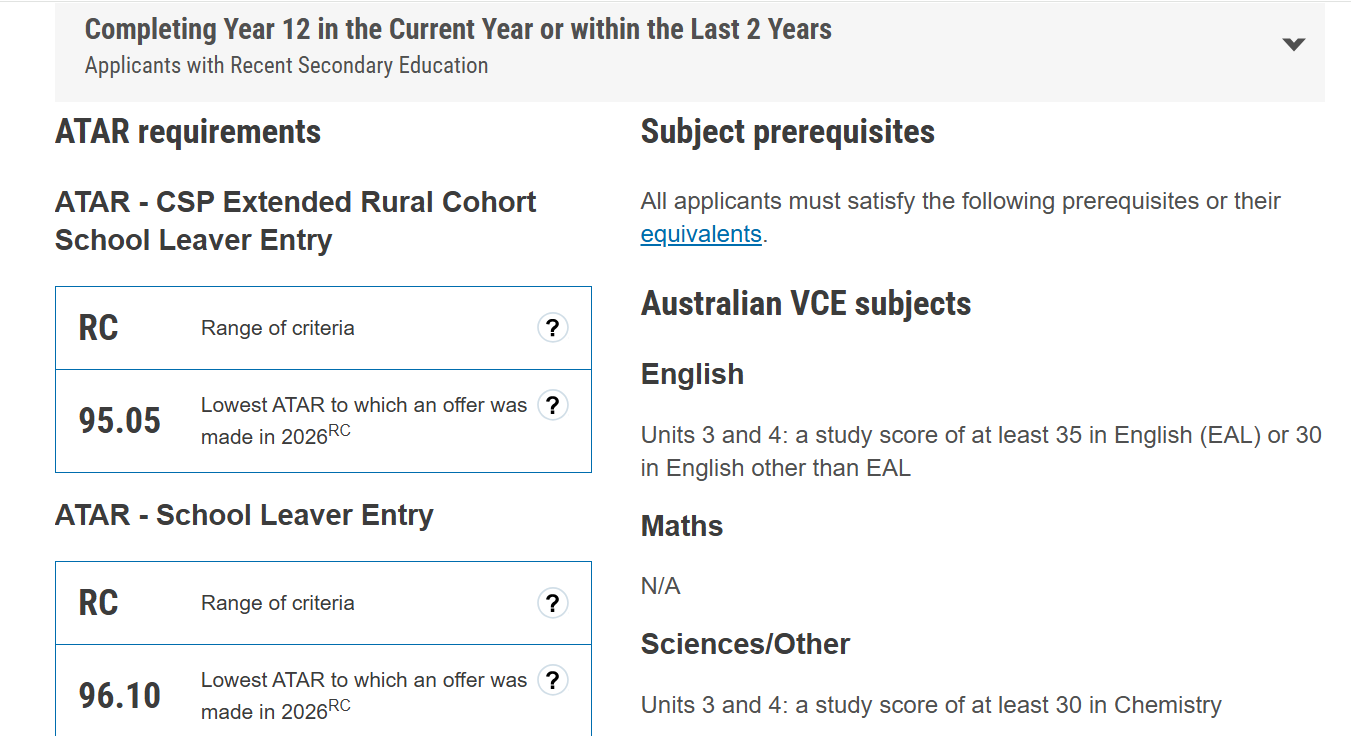
Health, biomedical science, pharmacy or medicine-related pathways may require Chemistry. Engineering, commerce, computer science or science may require Mathematical Methods or Specialist Mathematics. Requirements differ between universities and courses.
Use prerequisites to avoid accidentally closing pathways
The visual below shows why course prerequisites matter: the ATAR is not the only entry requirement. Students should check university course pages, VTAC CourseSearch and school careers advice before finalising subjects.
3 Look at the VCAA Study Design before choosing
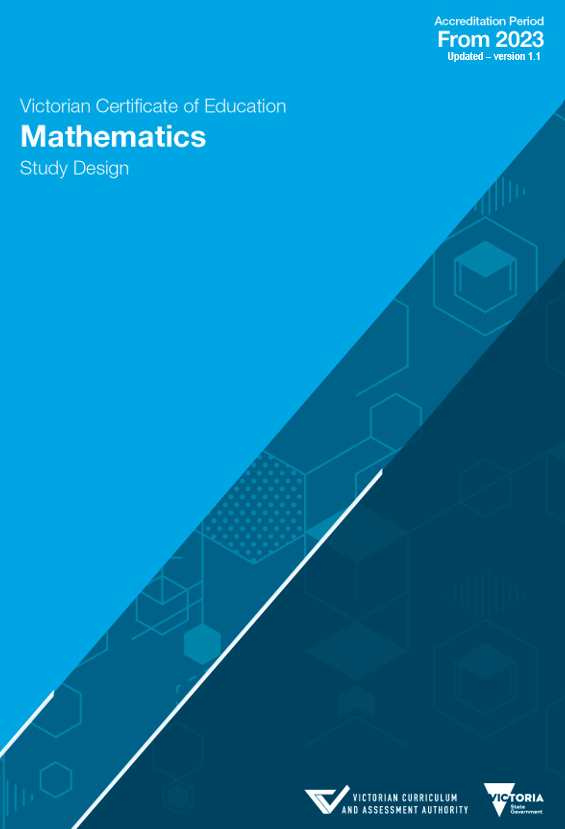
One of the most useful steps is to read the VCAA Study Design for each subject. The Study Design shows what students actually learn, how the subject is assessed, and what skills are expected.
Why this matters
The subject name alone can be misleading. Students should check the Units 1-4 overview, key knowledge, key skills and assessment structure before making a final decision.
Examples
- Psychology involves research methods, data interpretation and scientific writing.
- Physics requires strong mathematical problem-solving.
- Business Management requires application, explanation and evaluation.
- English, English Language and Literature involve different reading and writing styles.
Final advice
A good VCE subject selection should balance three things:
The best subject choices are not just about scaling or prestige. They are about choosing subjects that give students the best chance to succeed.
Need help making a confident subject selection plan?
Top Scope can help students and families understand subject options, prerequisites and study expectations before making a final decision. Please confirm all course requirements through official VCAA, VTAC and university sources.